When the first 40°C day hits, every air conditioner in the street gets switched on at once. That’s usually when we find out which systems were looked after over winter and which ones weren’t. A unit that sat idle for months, with dust on the coils and a filter nobody has checked, is suddenly asked to run flat out for ten hours a day. Some cope. Plenty don’t.
If you want to prepare your HVAC system for Australian summer properly, the work happens in spring, not on the hottest afternoon of January. This guide walks through what summer actually does to an AC system, a practical preseason AC checklist, where cleaning and coil treatment fit in, and how to keep running costs under control once the heat sets in.
The good news is that preparing your HVAC system for summer doesn’t have to be complicated. Clogged filters, dirty coils and restricted airflow can affect energy efficiency, indoor air quality and cooling performance, while contributing to musty odours and higher running costs. A few well-timed checks, thorough cleaning and attention to key components can help your system run more efficiently and keep indoor spaces comfortable as temperatures climb. The key is knowing what to inspect and which maintenance tasks to complete before the first major heatwave arrives.

Why Summer Puts Extra Stress on AC Systems
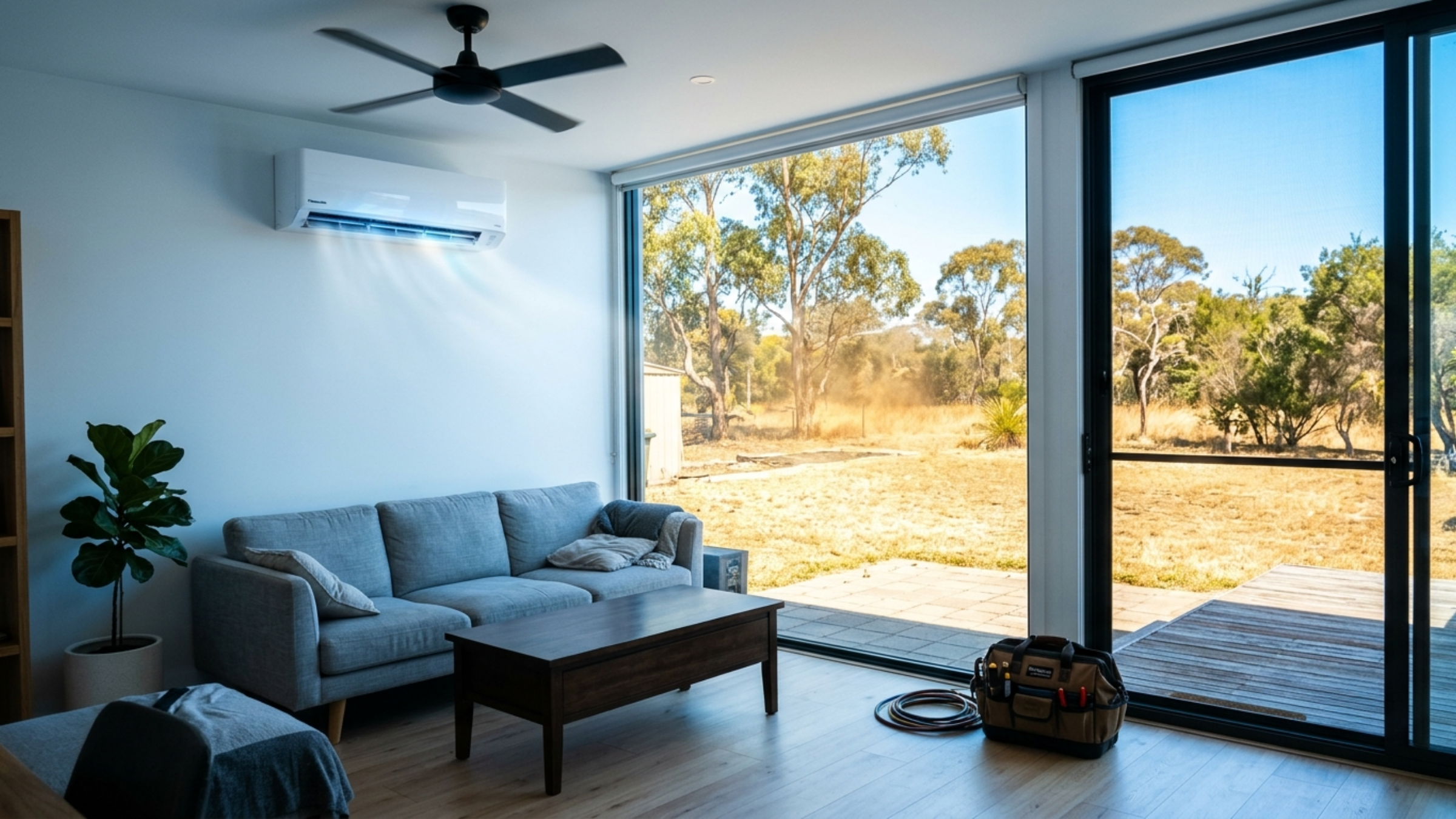
An air conditioner works by moving heat from inside your home to the outside. The hotter it is outdoors, the harder that job becomes. On a 42°C day in Adelaide, Perth or western Sydney, the outdoor unit is trying to reject heat into air that is already extremely hot, so the compressor runs longer and at higher pressure.
Australian conditions add a few extra problems on top of the heat itself:
- Long run times. Systems that cycle on and off in mild weather may run almost continuously during a heatwave, which exposes worn parts quickly.
- Humidity in the north and on the coast. In Brisbane, Darwin and Cairns, the system has to remove moisture as well as heat. Wet coils and drain trays are a breeding ground for mould and bacteria.
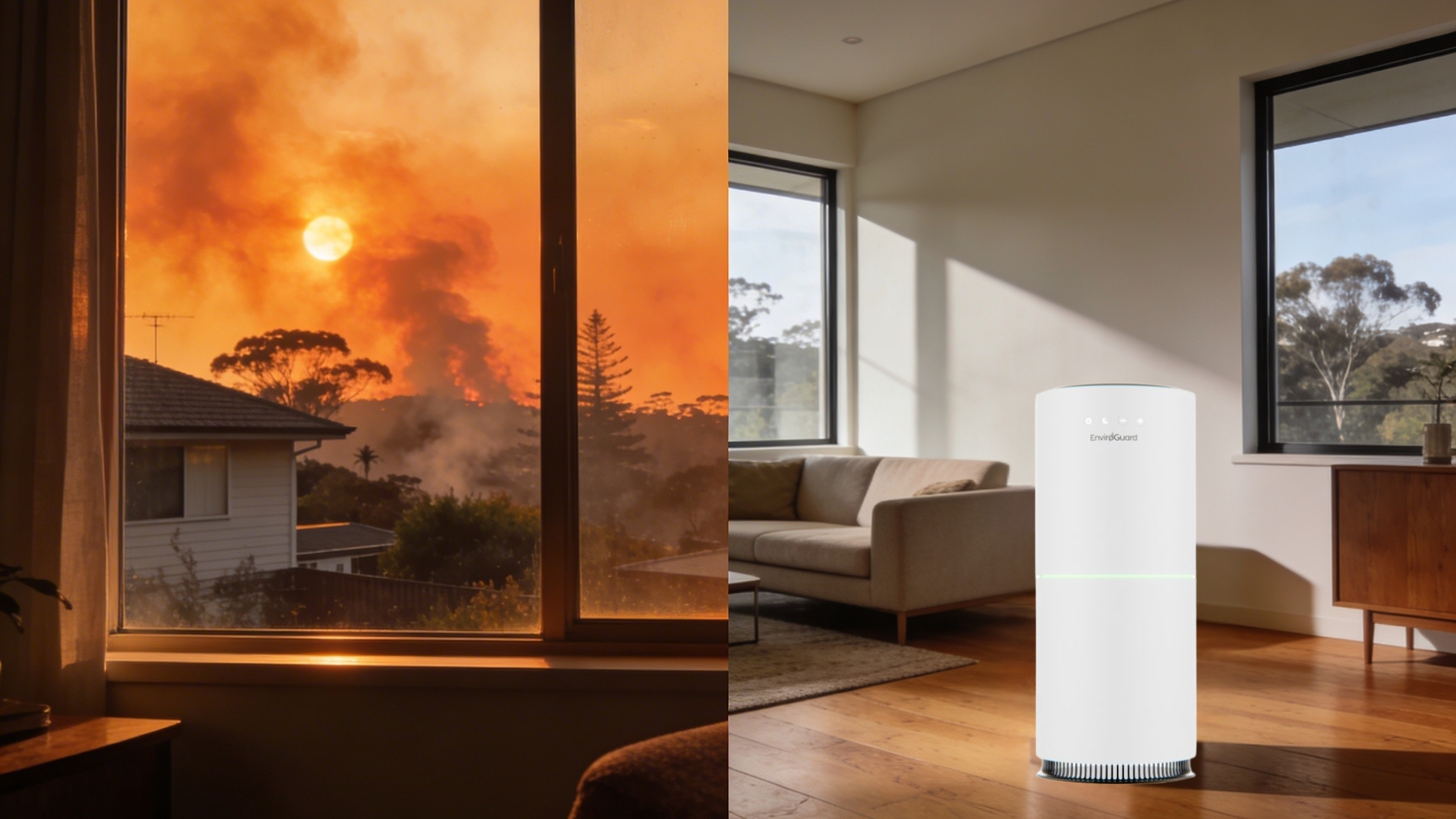
- Dust, pollen and bushfire smoke. Fine particles build up on filters and coils, cutting airflow and efficiency.
- Peak grid demand. When everyone is cooling at once, voltage dips and power interruptions are more likely, which can be hard on compressors and electronics.
Dirty coils make all of this worse. A layer of grime on the evaporator or condenser acts like insulation, so the system has to work harder to shift the same amount of heat. That means higher power bills, weaker cooling and more wear on the compressor.
Preseason AC Checklist
Run through this preseason AC checklist in October or November, before the real heat arrives. Some items are easy DIY jobs. Others belong with a licensed technician.
Jobs you can do yourself
- Clean or replace the filters. Most split system filters slide out and can be vacuumed or washed in lukewarm water. Let them dry fully before refitting. Ducted systems usually have a return air filter that needs replacing or cleaning.
- Check the outdoor unit. Clear leaves, grass clippings, cobwebs and anything stored against it. Aim for at least 50 cm of clear space around the sides and plenty above.
- Look at the condensate drain. Make sure water can drain freely and there’s no pooling, staining or musty smell near the indoor unit.
- Replace the remote batteries and test every mode. Run the system on cool for 20 to 30 minutes and check that the air coming out feels properly cold.
- Listen and smell. Rattling, squealing, clicking or a damp, sour smell are early warning signs worth acting on now.
Jobs for a licensed technician
- Refrigerant check. Low refrigerant usually means a leak. In Australia, handling refrigerant requires an ARCtick licence, so this is not a DIY job.
- Electrical inspection. Capacitors, contactors and wiring connections should be checked before they’re put under summer load.
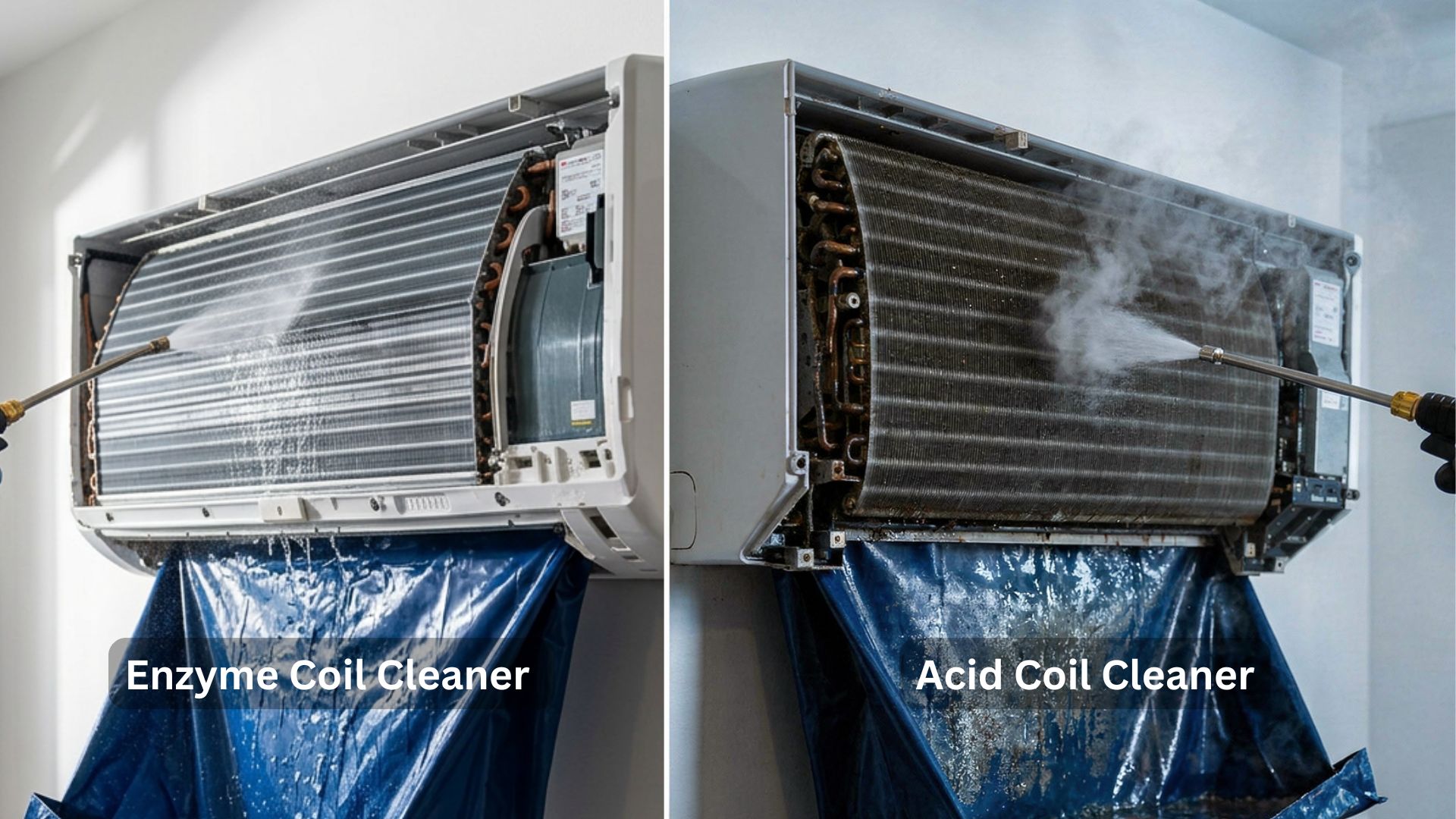
- Deep coil cleaning. Both the indoor evaporator coil and outdoor condenser coil, plus fan blades and drain trays.
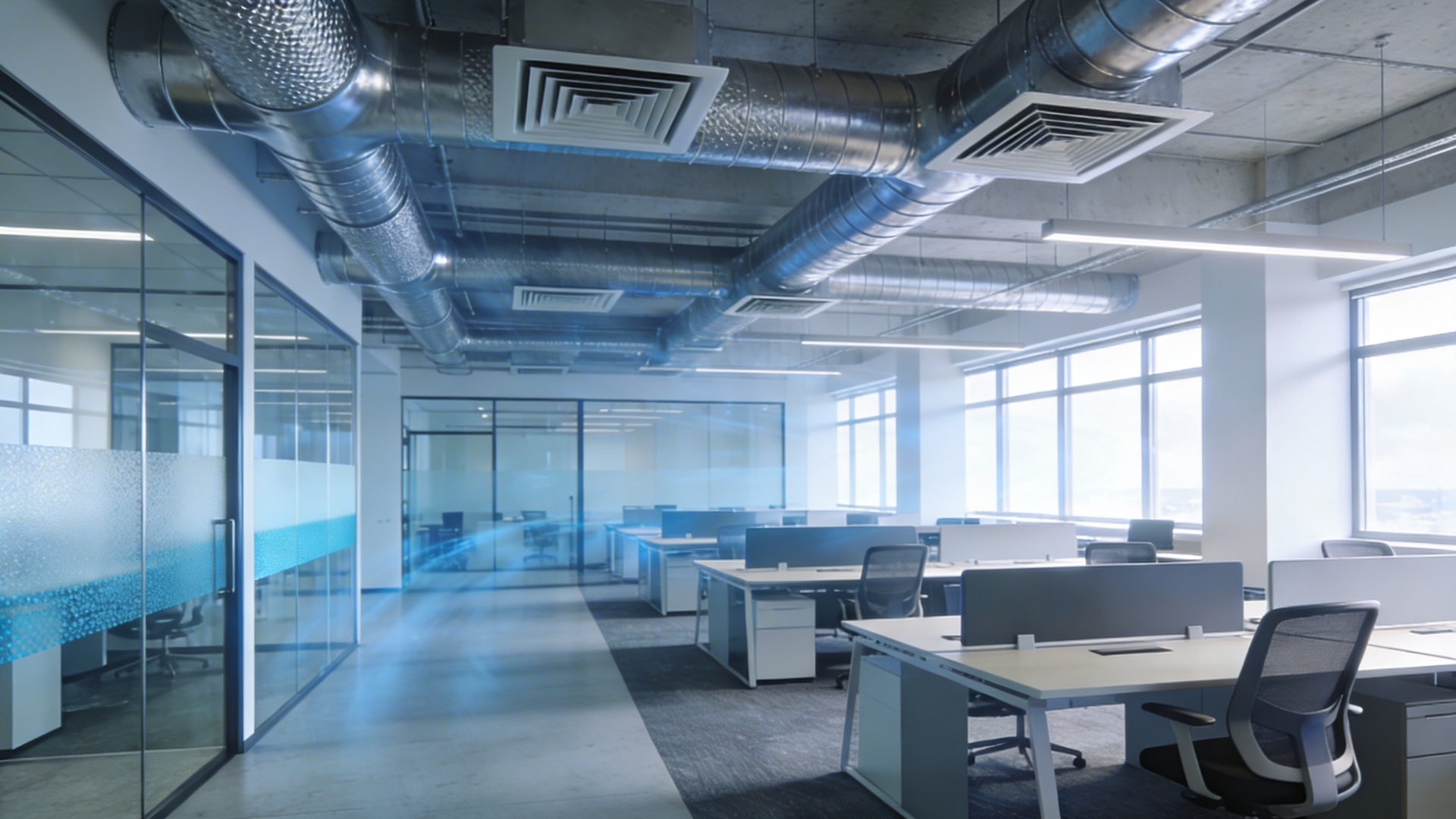
- Thermostat and controls calibration, especially for ducted and zoned systems.
Pay attention to musty smells before summer. A damp or stale odour when you switch on your air conditioner can indicate moisture, residue or build-up that needs attention. Investigating the cause early can help address potential indoor air quality concerns before the system runs for longer each day.
Cleaning and Treatment Priorities
If you only have time or budget for one serious job before summer, make it the coils. Filters catch the bigger particles, but fine dust, grease and biological growth still reach the coil surfaces. Over time this film reduces heat transfer and restricts airflow.
1. Evaporator coil (indoor)
The indoor coil is cold and wet when the system runs, which makes it the most likely place for mould and bacteria to grow. Signs of a dirty evaporator coil include a musty smell when the AC first starts, reduced airflow and the system struggling to reach the set temperature. Cleaning it with an enzyme-based product such as AerisGuard HVAC Coil Cleaner, which is pH neutral and safe on all metal surfaces, improves both airflow and indoor air quality.
2. Condenser coil (outdoor)
The outdoor coil collects dust, leaves, salt spray in coastal areas and general grime. Because this coil is responsible for getting rid of heat, a dirty condenser has a direct impact on summer performance. Gently rinse loose debris from the inside out, and use an outdoor-rated cleaner such as AerisGuard Outdoor Coil & Surface Cleaner for built-up dirt. Indoor coil products aren’t designed for outdoor units, so keep the two separate. Never use a high-pressure washer, as it can flatten the delicate fins.
3. Drain trays and lines
Blocked drains cause leaks, water damage and smells. Clearing them is part of any good summer air conditioning maintenance routine, especially in humid regions. A slow-release treatment like the AerisGuard Condensate Pan Tablet helps stop biofilm building up in the pan and drain lines.
4. Coil protection after cleaning
Cleaning gets the coil back to a good starting point. A protective coil treatment can help slow the return of grime and microbial growth, so the system holds its efficiency for longer through the season. AerisGuard Indoor Coil Treatment is applied straight onto the indoor coil and gives up to 12 months of residual protection against mould and odour-causing bacteria. For coastal homes, where salt air speeds up corrosion, AerisGuard Corrosion Protection Plus coats the outdoor coil to help it last.
Most of these jobs are best done by a technician, so ask yours whether they use a coil cleaning and protection system. The AerisGuard Indoor AC Cleaning and Protection Packbundles the cleaner, coil treatment and condensate pan tablet for a full indoor clean in one visit.

Energy Efficiency Optimisation
Cooling is one of the biggest drivers of summer power bills. These summer HVAC efficiency tips make a real difference without sacrificing comfort.
- Set it to 25°C to 27°C. That’s the summer cooling range energy.gov.au recommends. Every degree cooler can add 5% to 10% to your cooling energy use.
- Pre-cool, don’t panic-cool. Switch the AC on earlier in the afternoon at a moderate setting, rather than blasting it at 18°C when the house is already hot.
- Use zoning and close doors. Only cool the rooms you’re using. Ducted systems with zone controls should have unused zones turned off.
- Block the sun.Close blinds and curtains on west and north-facing windows during the hottest part of the day. External shading works even better.
- Use ceiling fans with the AC. Moving air feels cooler, so you can often set the thermostat a degree or two higher.
- Keep coils clean. Clean coils transfer heat more efficiently, which is one of the simplest ways to protect performance across the season.
If your system is more than 10 to 15 years old and struggles every summer, it may be worth comparing the running cost of a modern, higher-star-rated unit. The Zoned Energy Rating Label shows how a model performs in hot, average and cold Australian climates.
Common Summer HVAC Problems
Even well-maintained systems can run into trouble during a heatwave. Here’s what to watch for and what it usually means.
- AC running but not cooling.Often caused by dirty filters, dirty coils or low refrigerant. Check filters first, then call a technician.
- Ice on the indoor coil or pipes.Usually a sign of restricted airflow or low refrigerant. Switch the system off, let it thaw and book a service.
- Water leaking indoors.Typically a blocked drain line or overflowing drain tray.
- Musty or mouldy smell.A strong sign of microbial growth on the evaporator coil or in the drain tray. A coil clean and treatment usually fixes it.
- System tripping the circuit breaker.Can point to an electrical fault or a struggling compressor. Don’t keep resetting it. Get it checked.
- Outdoor unit very noisy or not running.Could be a failed fan motor or capacitor, both common in extreme heat.

Emergency Preparation
Heatwaves are a health risk, not just an inconvenience, especially for older people, babies and anyone with a medical condition. A little planning makes a breakdown far less stressful.
- Save your technician’s number now. Service companies get booked out quickly during heatwaves.
- Know where your isolator switch and circuit breaker are, so you can safely shut the system down if something goes wrong.
- Have a backup plan for cooling. Portable fans, a cool room with blinds closed, and a list of local cool places such as libraries or shopping centres.
- Protect against power issues. A surge protector suitable for your unit can help during storms and grid fluctuations. Ask your electrician what’s appropriate.
- Bushfire smoke days. Close windows, set the system to recirculate if it has that option, and replace filters after heavy smoke events.
FAQs About Summer AC Preparation
When should I service my air conditioner before summer?
Ideally in October or November. You’ll beat the rush, and any faults can be fixed before you actually need the system.
How often should I clean my AC filters in summer?
Every two to four weeks during heavy use, more often if you have pets, live near a busy road or have had bushfire smoke.
Can I clean the AC coils myself?
You can safely clean accessible outdoor coils and wipe down indoor surfaces using a product made for HVAC coils. For deep cleaning of indoor coils, refrigerant checks or anything electrical, use a licensed technician.
What temperature should I set my AC to in summer?
Between 25°C and 27°C, as recommended by energy.gov.au. Each degree warmer can cut cooling energy use by 5% to 10%.
Why does my AC smell musty when I turn it on?
That smell usually comes from mould or bacteria growing on a damp evaporator coil or in the drain tray. Cleaning the coil and applying a protective treatment normally solves it.
Get Ready Before the Heat Arrives
Preparing your HVAC system for Australian summer comes down to three things: clean it, check it, and plan for the worst days. Start with filters and the outdoor unit this weekend, book a professional service for the jobs you can’t do yourself, and make coil cleaning and protection part of your routine. When the heatwave arrives, your system will be ready for it.
Looking for HVAC cleaning and protection products? Browse the AerisGuard Catalogue.