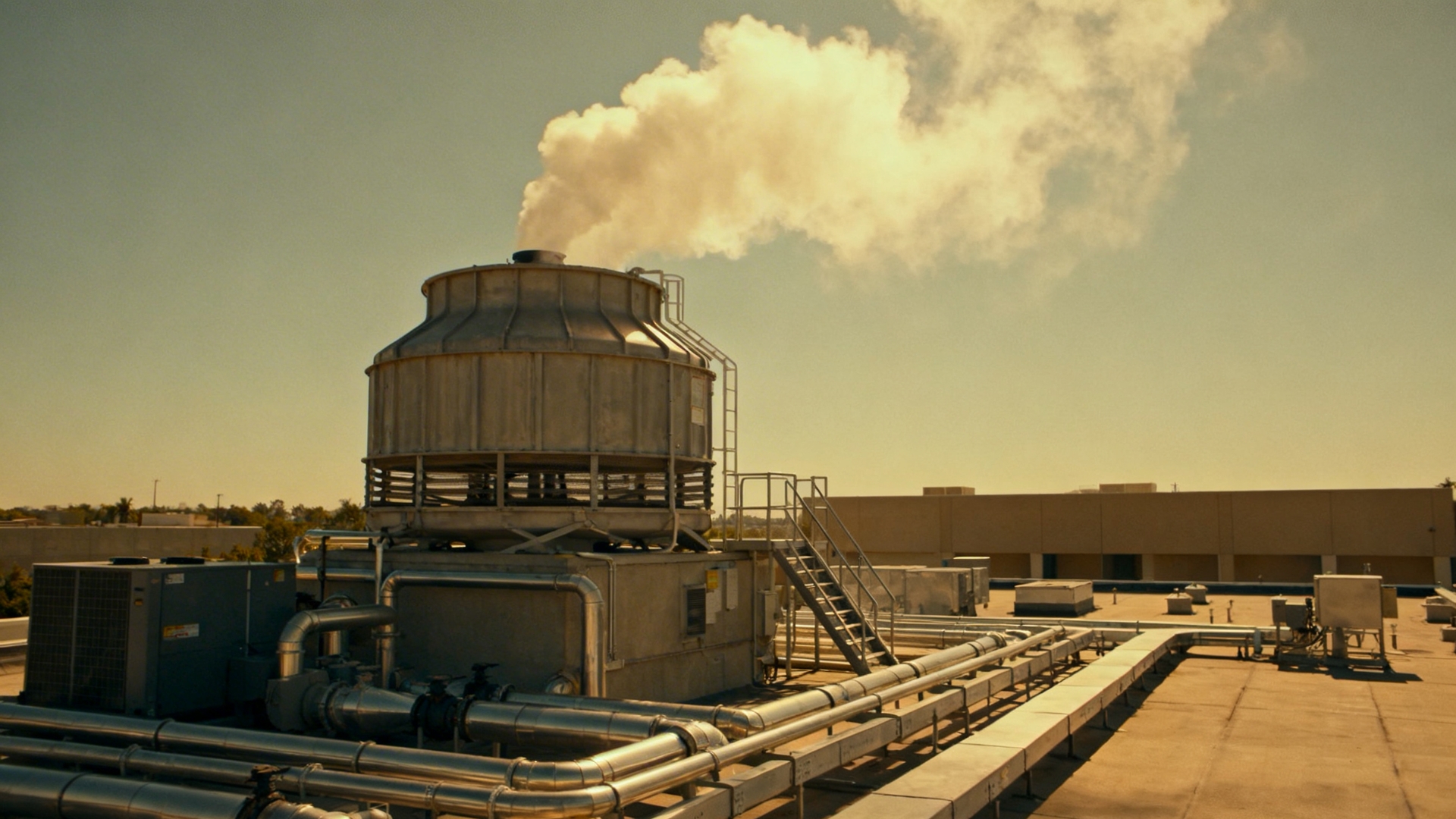
Cooling tower efficiency drops when biofilm, mineral scale, corrosion, poor water treatment, or dirty fill material blocks heat transfer. Your chillers and pumps work harder. Your energy bills climb. In Australia’s heat, even small losses add up fast.
The fix? Find the contamination. Restore heat transfer surfaces. Run a maintenance program that combines biological treatment, chemical control, and ongoing monitoring.
Signs Your Cooling Tower Is Underperforming
Cooling towers remove heat from HVAC and industrial systems. When they work well, system temperatures stay stable and energy use stays low.
Efficiency problems build slowly. You might not notice until your bills spike or cooling output drops.
Watch for these warning signs:
–Higher condenser water temperatures
–Reduced cooling capacity
–Increased energy consumption
–Visible biological growth
–Scale deposits on equipment
–Rising system pressure dro
Most facilities managers spot these problems only after performance has already dropped.
Regular monitoring catches issues early, before they turn into costly repairs or equipment failure.

Measuring Range and Approach
Two metrics tell you how well your cooling tower performs: range and approach.
Range is the temperature difference between hot water entering the tower and cooled water leaving it.
Approach is the difference between cooled water temperature and the ambient wet-bulb temperature.
When your tower runs well:
-Range stays consistent
-Approach stays low
-System temperatures hold steady
If biofilm, scale, or airflow problems develop, the approach rises. That means your tower is struggling to reject heat.
Track these numbers closely when working to improve performance.
Problem 1: Biofilm Reducing Heat Transfer
Biofilm is one of the most common cooling tower efficiency problems Australian facilities face.
Bacteria attach to surfaces and produce a protective slime layer. This layer coats heat transfer surfaces, piping, and tower components.
Over time, biofilm builds up and insulates those surfaces, reducing heat exchange.
How Biofilm Affects Cooling Performance
Biofilm creates a thermal barrier between water and heat transfer surfaces. Even thin layers cause significant heat transfer loss.
The result:
-Higher condenser temperatures
-Increased compressor workload
-Reduced cooling capacity
Studies show biofilm can cut heat transfer efficiency by 20-30%.

Problem 2: Scale Formation
Scale forms when dissolved minerals in water precipitate and deposit on system surfaces.
Cooling towers concentrate minerals as water evaporates. This raises the risk of buildup.
Common scale minerals:
– Calcium carbonate
– Magnesium salts
– Silica deposits
Impact of Scale on Efficiency
Scale reduces thermal conductivity and restricts water flow. Even thin deposits decrease heat transfer dramatically.
This leads to:
-Higher energy consumption
-Reduced cooling capacity
-Increased maintenance costs
Preventing scale is a key part of cooling tower maintenance.

Problem 3: Corrosion in System Components
Corrosion happens when metal surfaces deteriorate from chemical reactions with water, oxygen, and contaminants.
Cooling towers speed up corrosion because of:
-Warm temperatures
-Oxygen exposure
-Chemical treatment cycle
Effects of Corrosion on Cooling Towers
Corrosion causes:
-Equipment degradation
-Shorter system lifespan
-Metal contamination in water
-Structural damage to tower components
It also drives up maintenance costs and can cause leaks or equipment failure. Proper water chemistry control prevents corrosion.

Problem 4: Improper Water Treatment
Cooling towers need carefully balanced water treatment to control biological growth, scaling, and corrosion at the same time.
When treatment programs are poorly managed, problems develop fast.
Common issues:
– Incorrect chemical dosing
– Inconsistent monitoring
– Overreliance on chemical biocides
– Lack of biological control
Balancing Chemical and Biological Treatment
Effective cooling tower maintenance requires balance.
Chemical treatments control mineral scaling and corrosion. Biological treatments target microbial contamination.
When combined well, facilities achieve:
-Stable water chemistry
-Reduced biological fouling
-Improved heat transfer efficiency
Getting this balance right is the fastest path to better cooling tower performance.
Comprehensive Solution Approace
Cooling tower fill increases the contact surface area between water and air. This improves evaporative cooling.
Fill material is highly prone to contamination.
Common contaminants:
-Biofilm
-Dirt and debris
-Algae growth
-Mineral deposits
How Contamination Reduces Efficiency
When fill becomes blocked or coated, airflow and water distribution break down.
This causes:
-Reduced evaporation efficiency
-Increased fan energy use
-Higher outlet water temperatures
Keeping fill material clean is critical for peak tower performance.

Comprehensive Solution Approach
Fixing cooling tower efficiency takes more than a single cleaning event or chemical treatment. Towers run continuously and face constant exposure to environmental contamination, minerals, and microbial growth.
Lasting improvement requires a structured, ongoing maintenance strategy: monitoring, biological control, chemical treatment, system cleaning, and performance checks, all working together.
Here are the core components.
1. Routine Inspection and System Monitoring
Start with regular inspections. Cooling towers operate under harsh conditions: dust, airborne contaminants, organic debris.
Catch early signs of efficiency loss before they become major problems.
Inspection activities:
-Visual check of fill material and internal surfaces
-Checking for biofilm or algae growth
-Monitoring scale formation on pipes and heat exchangers
-Verifying water distribution across fill media
-Inspecting drift eliminators and airflow pathways
Also track system metrics: water temperature, flow rate, and fan operation. These numbers show whether thermal performance is holding.
Facilities that monitor regularly catch problems Australian operators often miss until energy costs have already climbed.
2. Biological Contamination Control
Microbial growth is one of the most persistent threats to cooling tower performance. Bacteria, algae, and fungi thrive in warm water. They form biofilms that coat heat transfer surfaces and tower components.
Once established, biofilm layers significantly reduce heat transfer and restrict water flow.
Biological treatment programs break down and remove these microbial colonies without damaging equipment.
Effective biological control includes:
-Biofilm removal treatments
-Controlled microbial population management
-Periodic system flushing
-Continuous monitoring of biological activity
Targeted biological treatments like AerisGuard Cooling Tower Cleaner remove biofilm buildup, restore heat transfer efficiency, and reduce microbial contamination risks.
3. Scale and Mineral Deposit Prevention
Scale layers accumulate over time and act as insulating barriers that block efficient heat transfer.
Prevention requires careful water chemistry management.
Key parameters to balance:
-Water hardness levels
-pH balance
-Total dissolved solids
-Cycles of concentration
Chemical inhibitors prevent mineral precipitation. But they must be carefully dosed to avoid imbalance.
Regular water testing keeps treatment programs effective and prevents scaling.
4. System Cleaning and Mechanical Maintenance
Even with good chemical and biological treatment, cooling towers need periodic mechanical cleaning.
Dust, organic matter, and sediment build up in tower basins and distribution systems. Left alone, they fuel microbial growth and block airflow.
Mechanical maintenance includes:
-Cleaning cooling tower basins
-Removing debris from strainers and filters
-Flushing distribution lines
-Inspecting spray nozzles
-Checking fan operation and airflow
This keeps water distribution even across fill material and maintains consistent cooling.
5. Fill Material Cleaning and Restoration
Fill structures increase the surface area where water contacts airflow. They drive evaporative cooling.
Dust, algae, scale, and biofilm can clog fill channels, reducing airflow and disrupting water distribution.
When fill gets contaminated, performance drops fast.
Cleaning or restoring fill may involve:
-Chemical cleaning to remove scale
-Biological treatments to eliminate biofilm
-Physical flushing of blocked channels
-Replacement of severely damaged fill
Regular fill inspection and maintenance are core parts of any maintenance program.
6. Performance Testing and Verification
After maintenance, test cooling tower performance to confirm the improvements worked.
Key measurements:
-Cooling range
-Approach temperature
-Heat rejection efficiency
-System energy consumption
These metrics show whether maintenance interventions restored thermal performance.
Tracking performance data over time reveals patterns and supports proactive maintenance before efficiency losses become severe.
7. Long-Term Preventive Maintenance Planning
Cooling tower improvement is not a one-time job. Lasting results require a preventive maintenance strategy.
Preventive programs should include:
-Scheduled biological cleaning cycles
-Routine water chemistry testing
-Equipment inspection and servicing
-Periodic fill material evaluation
-Performance monitoring and reporting
Combining these elements maintains efficient operation and prevents recurring contamination.
Why a Structured Approach Matters
Without a structured program, problems return fast. Biofilm regrows within days. Scale returns within weeks. Debris accumulates again if left unchecked.
A structured strategy addresses all contributing factors – biological, chemical, and mechanical – together.
This allows facilities to:
-Improve cooling tower performance
-Reduce operational energy costs
-Extend equipment lifespan
-Maintain reliable system operation
For facilities running large HVAC or industrial cooling systems, restoring cooling tower efficiency delivers significant energy savings and better system reliability.
Energy Cost Implications
Cooling tower inefficiency directly increases energy costs.
When heat rejection drops:
-Chillers work harder
-Pumps run longer
-Compressors consume more electricity
Even small efficiency losses carry a significant financial impact.
For large commercial buildings or industrial facilities, improving cooling tower efficiency can cut operational energy costs substantially.
FAQs About Cooling Tower Performance
What causes cooling tower efficiency problems?
Biofilm buildup, mineral scale, corrosion, improper water treatment, and contaminated fill material are the most common causes.
How does biofilm affect heat transfer?
Biofilm forms an insulating layer that prevents efficient heat exchange between water and cooling surfaces.
How often should cooling towers be cleaned?
It depends on operating conditions, but typically quarterly to annually.
Can scale formation increase energy consumption?
Yes. Scale deposits reduce heat transfer efficiency and force cooling systems to use more power.
Why does water treatment matter for cooling towers?
Proper treatment prevents microbial growth, scale formation, and corrosion that reduce system efficiency.
What is the best way to improve cooling tower performance?
Combine biological cleaning treatments, water chemistry control, and regular maintenance inspections.
Can cooling tower maintenance reduce operational costs?
Yes. Better efficiency lowers energy consumption and extends equipment lifespan
Key Takeaways
- Biofilm is a major cause of heat transfer reduction
- Mineral scale significantly reduces cooling efficiency
- Corrosion damages system components
- Balanced water treatment keeps systems running well
- Regular maintenance improves cooling tower performance
AerisGuard™ Cooling Tower Cleaner removes biofilm, improves heat transfer, and reduces energy costs with biological treatment.